鑫景福致力于滿足“快速服務,零缺陷,輔助研發(fā)”PCBA訂購單需求。



PCB制造
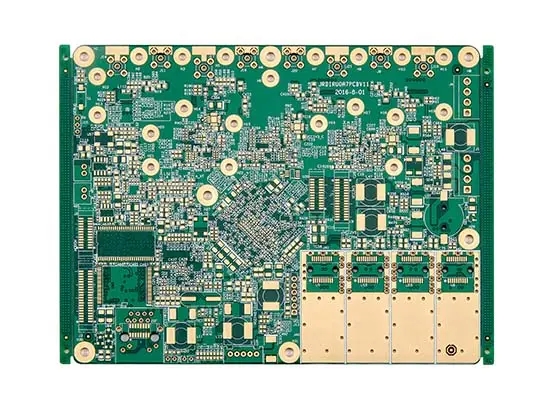
Selecting PCB materials for power divider and coupler of high frequency devICes
PCB manufacturers, PCB designers and PCBA manufacturers will explain the selection of PCB materials for power splitters and couplers of high-frequency devices
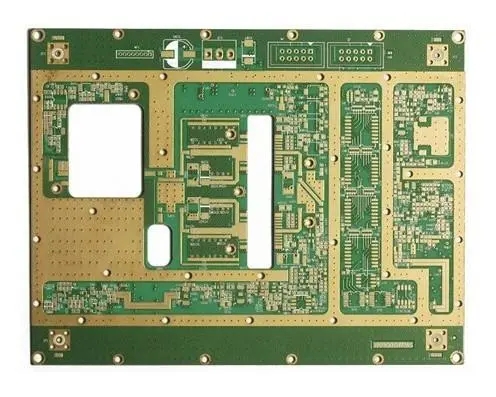
Power splitters and combiners are the most common high-frequency devices, as well as couplers such as directional couplers. These devices are used for power splitting, combining, and coupling high frequency energy from the antenna or the system, and the loss and leakage are very SMAll. The selection of PCB high-frequency RF circuit board is a key factor for these devices to achieve the expected performance. When designing and processing power splitters/combiners/couplers, it is helpful to understand how the performance of PCB high-frequency RF circuit board materials affects the final performance of these devices. For example, it can help to limit a series of different performance indicators of selected boards, including frequency range, working bandwidth, and power capacity.
Many different circuits are used to design power dividers (in turn, combiners) and couplers, which have different forms. The power divider has SIMple two-way power divider and complex N-way power divider, depending on the actual needs of the system. Many different directional couplers and other types of couplers have also made great progress in recent years, including Wilkinson and resistive power divider, Langer coupler and orthogonal hybrid power saving bridge, which have many different forms and sizes. In these circuit designs, selecting the appropriate PCB high-frequency RF circuit board materials will help to achieve the best performance.
These different circuit types will compromise the structure and performance of the design to help designers select plates for different applications. Wilkinson two-way power divider provides two-way output signals with equal amplitude and phase through a single input signal. In fact, it is a "lossless" circuit designed to provide an output signal that is 3 dB smaller than the original signal (or half of the original signal) (the output power of each port of the power divider decreases with the increase of the number of output ports). In contrast, the resistive dual power divider provides an output signal 6dB smaller than the original signal. The impedance added in each branch of resistive power divider increases the loss, but also increases the isolation between two signals.
Like many RF circuit designs, dielectric constant (Dk) is generally the starting point for selecting materials for different PCB high-frequency RF circuit boards, and power divider/power synthesizer designers generally tend to use circuit materials with high dielectric constant (Dk), because these materials can provide effective electromagnetic coupling on smaller circuits compared with low dielectric constant materials. The circuit with high dielectric constant has a problem, that is, the dielectric constant in the circuit board has anisotropy or the dielectric constant values of the circuit board are different in the x, y, z directions. When the dielectric constant varies greatly in the same direction, it is also difficult to get a transmission line with uniform impedance.
It is very important to keep impedance invariance in realizing the characteristics of power divider/combiner. The change of dielectric constant (impedance) will lead to the uneven distribution of electromagnetic energy and power. Fortunately, there are commercial PCB high-frequency RF circuit board materials with superior isotropy that can be used in these circuits, such as TMM 10i circuit materials. These materials have a relatively high dielectric constant value of 9.8 and are maintained at a level of 9.8+/-0.245 (measured at 10GHz) in the three coordinate axis directions. It can also be understood that in the transmission line of power divider/combiner and coupler, uniform impedance characteristics can make the distribution of electromagnetic energy in the device constant and measurable. For PCB high-frequency RF circuit board materials with higher dielectric constant, TMM 13i laminate has a dielectric constant of 12.85 and changes within+/-0.35 (10GHz) in three axes.
Of course, when designing power divider/power synthesizer and coupler in RF PCB, constant dielectric constant and impedance characteristics are only one of the material parameters of RF PCB. When designing power divider/combiner or coupler circuits, minimizing insertion loss is usually an important goal. Ideally, a two-way Wilkinson power divider can provide two output ports with - 3dB or half of the input electromagnetic energy. In fact, each power divider/combiner (and coupler) circuit will have a certain insertion loss, which usually depends on the frequency (when the frequency increases, the loss also increases). Therefore, for the design of a power divider/combiner, the selection of PCB high-frequency RF circuit board materials needs to consider how to control to minimize the insertion loss of the circuit.
In passive high-frequency devices such as power divider/combiner or coupler, insertion loss is actually the sum of many losses, including dielectric loss, conductor loss, radiation loss and leakage loss. Some of these losses can be controlLED by careful circuit design, and they may also depend on the characteristics of PCB high-frequency RF circuit board materials and can be minimized by reasonably selecting PCB high-frequency RF circuit board materials. Impedance mismatch (VSWR loss) can cause loss, but it can be reduced by selecting PCB high-frequency RF circuit board materials with constant dielectric constant.
Minimizing the loss is critical in designing power splitters/combiners and couplers with high power values, because at high power, the loss will be converted into heat and dissipated in the device and PCB high-frequency RF circuit board materials, and the heat will affect the dielectric constant (and impedance value) of the materials.
In a word, when designing and processing high-frequency power splitters/combiners and couplers, the selection of materials for PCB high-frequency RF circuit boards should be based on many different key material characteristics, including the dielectric constant value, the continuity of the dielectric constant of the material, environmental factors such as temperature, and the reduction of material losses including dielectric loss, conductor loss, and power capacity. The selection of PCB high-frequency RF circuit board materials for specific applications will help to achieve success in the design of high-frequency power divider/combiner or coupler. PCB manufacturers, PCB designers and PCBA manufacturers will explain the selection of PCB materials for power splitters and couplers of high-frequency devices.

抖音二維碼

Q Q二維碼

微信二維碼
點擊
然后
聯(lián)系
然后
聯(lián)系
電話熱線
13410863085Q Q

微信

- 郵箱