鑫景福致力于滿足“快速服務,零缺陷,輔助研發(fā)”PCBA訂購單需求。

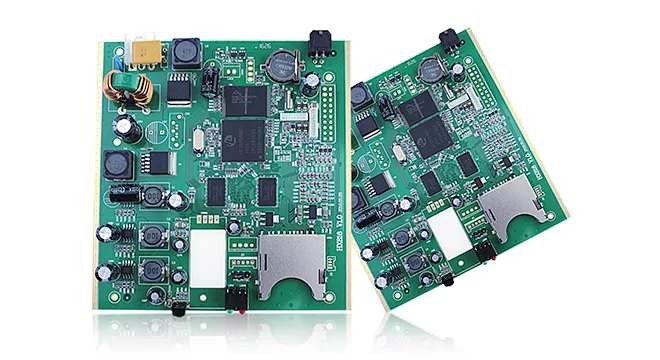

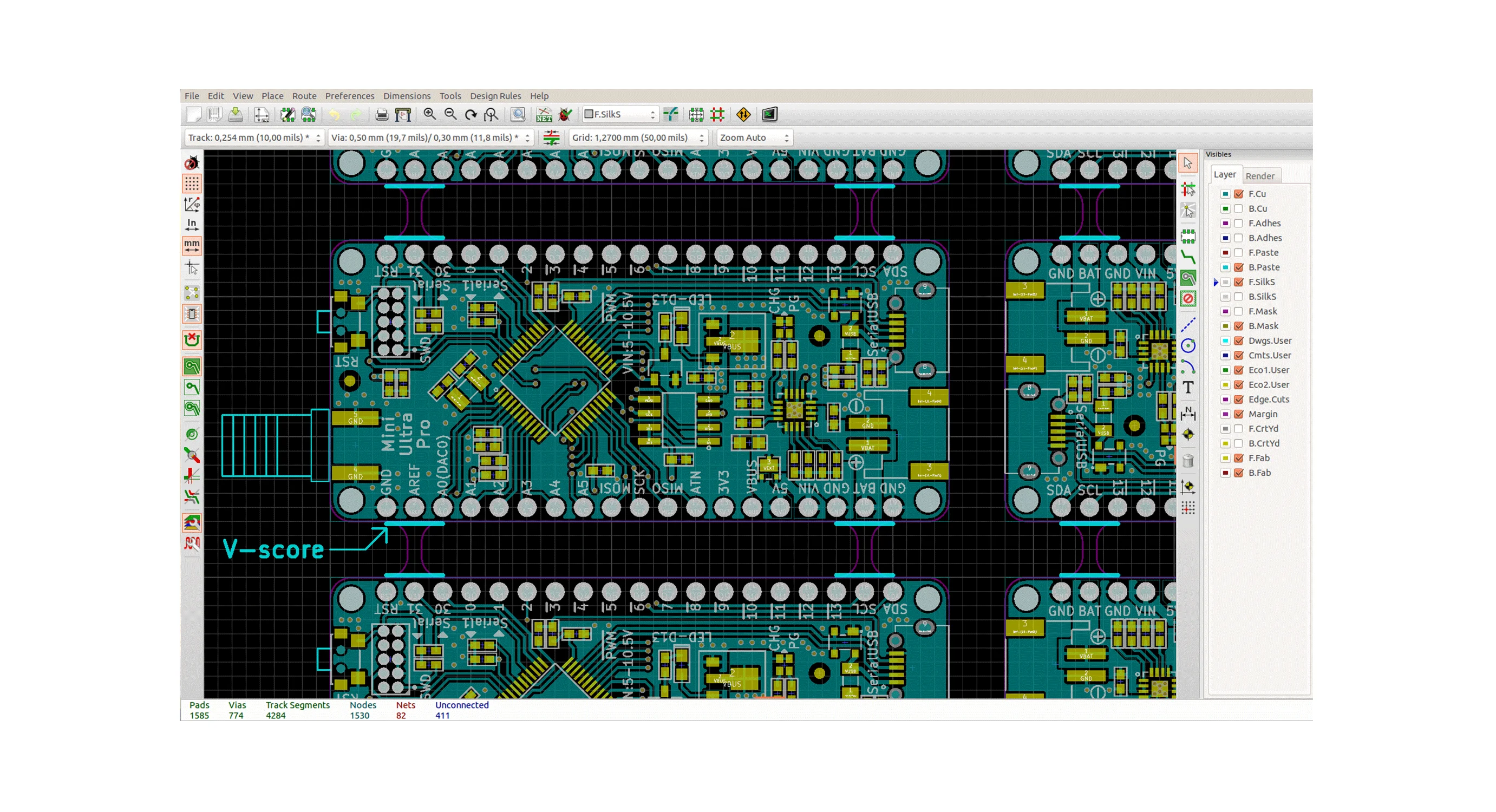

PCBA加工
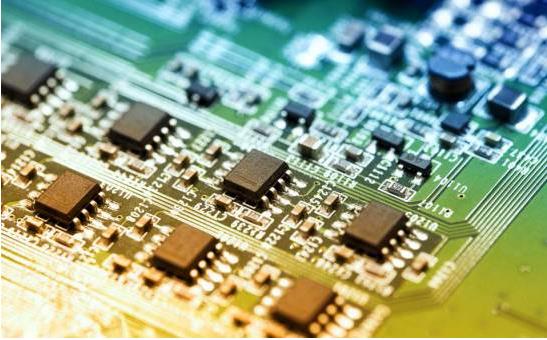
As an important electronIC component, the printed circuit board is the support of electronIC components. Because of its important role in the field of electronic components, it is calLED "electronic aircraft carrier" by many people.
Today, communication products, computers and almost all other electronic products use printed circuits. The development and improvement of printed circuit technology created conditions for the invention of the integrated circuit that changed the face of the world. With the development of science and technology, printed circuit boards are widely used in high-tech fields such as military, communications, medical, electric power, automobiles, industrial control, SMArt phones, and bearable.
Invention of the printed circuit
The printed circuit was invented by Austrian electrical engineer Paul Eisner in the mid-1930s. Eisner studied electrical engineering at the Vienna Institute of Technology in his early years, and after graduating in 1930, studied printing technology. While he was doing research on electronic circuit boards, he often went to the library to consult books and periodicals on printing technology.
After serious thinking, he CAMe up with an idea: if the circuit of electronic equipment is printed on the PCB circuit board one at a time, just like printing books or newspapers, there is no need to make the circuit board piece by piece by hand, and the circuit does not need to be made by people one by one. If the root is welded, the production efficiency and reliability of electronic products can be greatly improved.
In the printing industry, in order to print pictures on paper, photoengraving techniques are usually used. That is to say, by taking pictures, the negative plate of the photographed picture is etched on the copper plate or zinc plate, and many pictures can be printed with this copper plate or zinc plate.
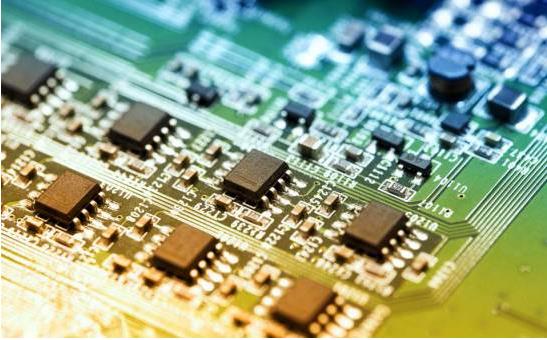
Eisner also tried a plate-making method SIMilar to the printing industry when making circuit boards. He first drew the electronic circuit diagram, and then etched the circuit diagram on an insulating board covered with a layer of copper foil, so that the unnecessary copper foil was etched away, leaving only the conductive lines. In this way, the various electronic components are connected to each other through the circuit formed by the copper foil on this board. This kind of printed circuit can not only improve the reliability of electronic products, but also greatly improve the production efficiency, and has great value and potential for the development of new electronic products.
The use of printed circuit technology makes the mass production of electronic equipment simple and easy, laying the foundation for the mechanized and automated production of electronic products. Since the 1950s, the substantial progress made in various electronic products, including communication equipment, is inseparable from the adoption of printed circuit technology.
With the continuous improvement of the manufacturing level of printed circuits, the printed circuits produced can achieve high precision, thus pushing the manufacturing of circuit boards to a new stage. When making plates in the printing industry, a large picture can be reduced to a certain size by shooting.
When manufacturing printed circuits, the electronic circuit diagram can also be reduced to make a plate, making it an electronic circuit board with a small area, complex circuits and high reliability. This printed circuit board is very suitable for communication equipment and computers with complex lines and high reliability requirements. The development of printed circuit technology laid the necessary technical foundation for the subsequent invention of integrated circuits.
The circuit board has a history of more than 60 years since its invention. History shows that without circuit boards, without electronic circuits, flight, transportation, atomic energy, computers, aerOSPace, communications, home appliances... all of this cannot be achieved.
The reasoning is easy to understand. chips, Cs, and integrated circuits are the food of the electronic information industry. semiconductor technology reflects a country's industrial modernization level and guides the development of the electronic information industry. The electrical interconnection and assembly of sEMIconductors (integrated circuits, Cs) must rely on circuit boards.
Types of printed circuit boards
The printed circuit boards used in actual electronic products vary widely, and there are different classifications of printed circuit boards according to different standards.
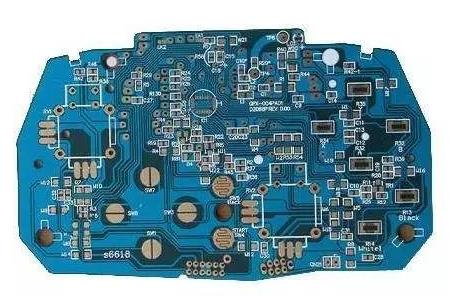
Classification by distribution of printed circuits
According to the approximate distribution of printed circuits, printed circuit boards can be divided into three types: single-sided, double-sided and multi-layered.
1.single panel
The single panel is in thickness o. On the 2-5mm insulating substrate, only one surface is covered with copper foil, and a printed circuit is formed on the substrate by printing and etching. The single-panel is simple to manufacture and easy to assemble, and is suitable for one-place circuit requirements, such as radios, TV sets, etc.; it is not suitable for occasions requiring high assembly density or complex circuits.
2.Double panel
The double-sided panel is o in thickness. The 2-5mm insulating substrate has printed circuits on both sides. It is suitable for electronic products with general requirements, such as electronic computers, electronic instruments and meters. Since the wiring density of the double-sided printed circuit is higher than that of the single-sided printed circuit, the volume of the device can be reduced.
3.Multi layer board
A printed board with more than 3 layers of printed circuits printed on an insulating substrate is called a multi-layer board. It is made of several layers of thin single-sided or double-sided boards, and its thickness is generally 1.2-2.5m. In order to lead out the circuit sandwiched between the insulating substrates, the holes for mounting components on the multilateral board need to be metabolized, that is, the inner surface of the small holes is coated with a metal layer, so that it is connected to the printed circuit sandwiched between the insulating substrates.
Schematic diagram of multi-layer board structure 2-2 The components used in multi-layer boards are mostly SMD components, which are characterized by:
1. Used in conjunction with integrated circuits, the whole machine can be miniaturized and the weight of the whole machine can be reduced;
2. Improve the wiring density, reduce the spacing of components, and shorten the signal transmission path;
3. Reduce the welding points of components and reduce the failure rate,
4. A shielding layer is added to reduce the signal distortion of the circuit;
5. The grounding heat dissipation layer is introduced, which can reduce local overheating and improve the reliability of the whole machine.
Classification according to the nature of the substrate
According to the nature of the substrate, printed circuit boards can be divided into two types: rigid and flexible.
Rigid Printed Board
The rigid printed board has a certain mechanical strength, and the components assembled with it have a flat state. Rigid printed boards are used in general electronic products.
Flexible printed boards are made of soft layered plastics or other soft insulating materials. The parts it is made of can be bent and stretched, and can be bent according to the installation requirements when in use. Flexible printed boards are generally used in special occasions. For example, the display screen of some digital altimeters can be rotated, and flexible printed boards are often used inside; the display screen and buttons of mobile phones, etc.
Mobile phone flexible printed board, its base material is polymerize, and the surface is treated with anti-oxidation, and the minimum line width and line spacing are set to o. 1mm. The outstanding features of flexible printed boards are that they can be bent, curled, and folded, and can be connected to rigid printed boards and moving parts, so that three-dimensional wiring can be achieved and three-dimensional space interconnection can be realized. Small, high-density electronic products.
Classification by scope of application
According to the scope of application, printed circuit boards can be divided into low-frequency and high-frequency printed circuit boards.
The high frequency of electronic equipment is the development trend, especially in today's increasingly development of wireless networks and satellite communications, information products are moving towards high speed and high frequency, and communication products are moving towards the standardization of voice, video and data for wireless transmission with large capacity and high speed. Therefore, the new generation of products developed require high-frequency printed boards, and the foil-clad substrates can be made of materials with low dielectric loss and low dielectric constant such as polyurethane, ethylene, polystyrene, and Polytetrafluoroethylene glass cloth.
Types of special printed boards
At present, there are also some special printed boards such as metal core printed boards, surface mounted printed boards, and carbon film printed boards.
Metal Core Printed Board
The metal core printed board is to replace the epoxy glass cloth board with a metal plate with a similar thickness. After special treatment, the conductor circuits on both sides of the gold board are connected to each other, and are highly insulated from the metal part. The advantages of metal core printed boards are good heat dissipation and dimensional stability, because magnetic materials such as aluminum and iron have a shielding effect, which can prevent mutual interference.
surface mount printed board
The surface mount printed board is a printed board developed to meet the needs of "light, thin, short and small" electronic products, and to cooperate with the mounting process of surface mount devices with high pin density and low cost. The printed board has the characteristics of small aperture, small line width and spacing, high precision, and high substrate requirements.
carbon film printed board
The carbon film printed board is a printed board in which a layer of carbon film is printed to form a contact or jumper (the resistance value meets the specified requirements) after the conductor pattern is made on the copper-clad plate. It is characterized by simple production process, low cost, short cycle, good wear resistance and electrical conductivity, which can realize high density of single panel, miniaturization and light weight of products, and is suitable for TVS, telephones, video recorders and electronic organs. and other products.

抖音二維碼

Q Q二維碼

微信二維碼
點擊
然后
聯(lián)系
然后
聯(lián)系
電話熱線
13410863085Q Q

微信

- 郵箱